WEEK OF FEB 15 – 21, 2025

A frontier reasoner shipped with the safety tuning stripped out

Perplexity republished DeepSeek-R1 under MIT with its censorship removed. The same week Arc and NVIDIA put the largest fully open biology model on the internet — and OpenAI measured frontier models against $1M of real freelance work.

Perplexity released R1-1776 under the MIT license — a DeepSeek-R1 derivative, 671B total and 37B active parameters, post-trained to strip roughly 300 identified censored topics while holding math and reasoning at parity.

The Arc Institute and NVIDIA published Evo 2, a 40B genomic model they call the largest fully open AI model to date, with weights, data and code all released. xAI launched Grok 3 on roughly ten times Grok 2's compute, and OpenAI's SWE-Lancer benchmark showed the best frontier model solving only 26.2% of real paid engineering tickets.

THU · Feb 20, 2025litigationcopyrightdmcaopenai

Judge Rakoff lets The Intercept's DMCA claim against OpenAI proceed — and dismisses Microsoft

Judge Jed S. Rakoff filed the full opinion explaining his earlier order: The Intercept plausibly alleged OpenAI intentionally removed copyright management information — author names, titles — from its articles while building training datasets, and that removal would facilitate downstream infringement, so the DMCA claim survives dismissal.

Rakoff threw out the related distribution claim against both defendants and dismissed Microsoft entirely, finding the evidence of CMI removal pointed only at OpenAI. The ruling diverges from a Manhattan judge who dismissed similar suits from other news organizations, and it opens the DMCA route for other generative-AI plaintiffs.

Judge Rakoff lets The Intercept's DMCA claim against OpenAI proceed — and dismisses Microsoft
news-api.bloomberglaw.com

WHY IT MATTERS

Copyright and training-data liability is now a per-claim, per-defendant fight rather than an all-or-nothing fair-use ruling. Anyone shipping a model trained on scraped data should track DMCA exposure specifically, not just fair use — and note the timing: the same week an MIT-licensed 671B reasoning model circulated freely with no CMI obligations attached to it at all.
WED · Feb 19, 2025open weightssciencegenomicsarchitecturenvidia

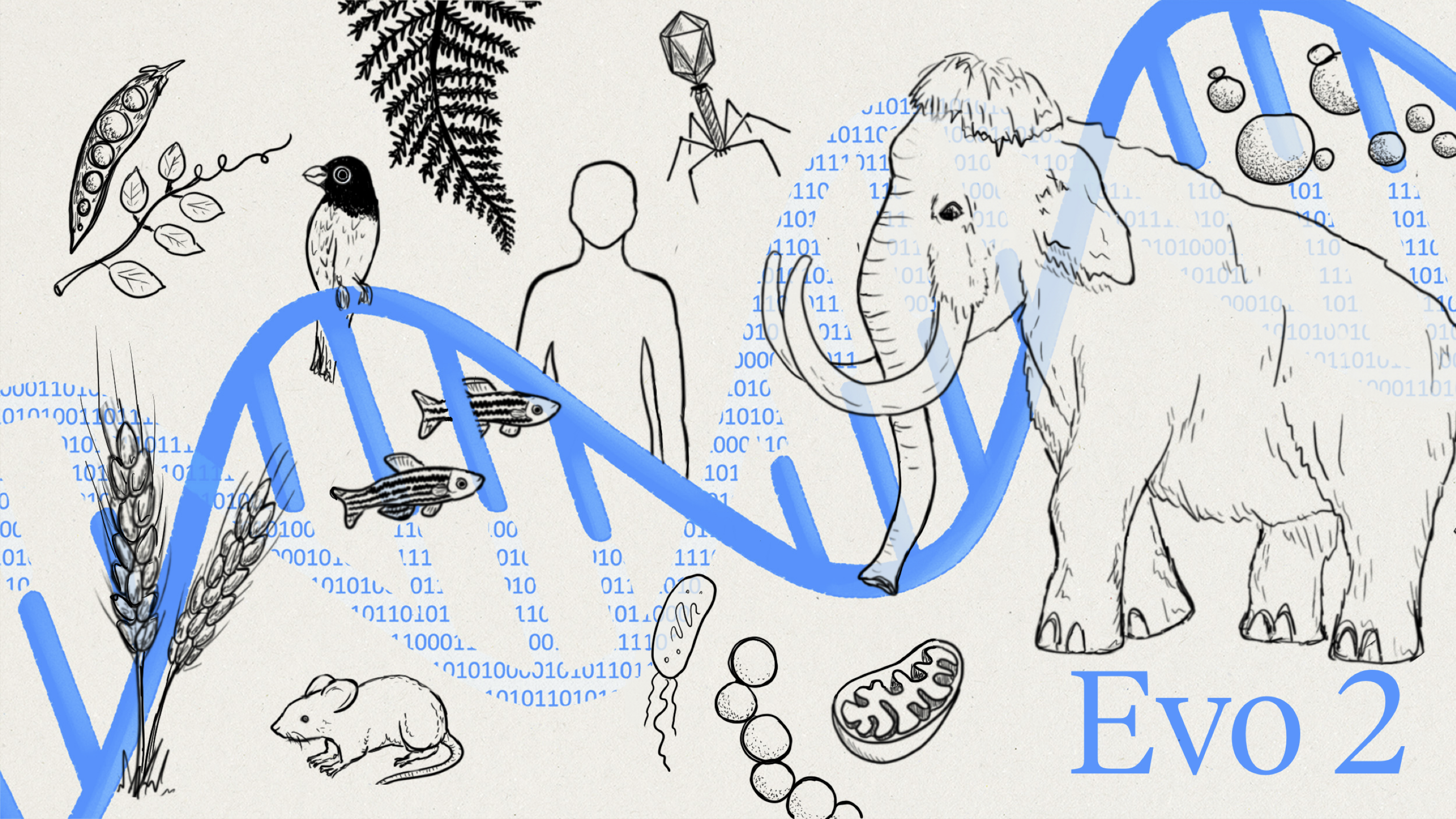
Arc Institute and NVIDIA publish Evo 2: a 40B genomic model released fully open

Evo 2 is a genomic foundation model trained on the DNA of more than 100,000 species spanning all domains of life, on roughly 9 trillion nucleotides.

At 40B parameters it is described as the largest AI model for biology to date, with context up to 1 million nucleotides and a new StripedHyena 2 architecture. It can flag disease-causing mutations and generate coding-rich sequences up to a million bases long; Arc says 16 of 285 designed phage genomes were viable in lab testing. Training data, training and inference code, and model weights were all released, with the model integrated into NVIDIA BioNeMo alongside an interpretability visualizer.

Arc Institute and NVIDIA publish Evo 2: a 40B genomic model released fully open
arcinstitute.org

WHY IT MATTERS

The week's cleanest example of the fully-open ceiling moving into a domain closed models had dominated. It is evidence that open releases now set the pace outside text too, and that labs will open-source even dual-use biology when the capability is already in the literature — the governance question follows the release rather than preceding it.

WED · Feb 19, 2025computechipsquantummicrosoftresearch

Microsoft unveils Majorana 1, its first chip built on topological qubits

Microsoft announced Majorana 1, a quantum processor it says is the first powered by a topological core, with eight topological qubits on a chip designed to scale toward a million.

The claim rests on a peer-reviewed Nature paper describing a hardware-protected topological qubit built from an indium-arsenide and aluminum stack Microsoft calls a topoconductor, plus a measurement technique precise enough to read the parity state of a superconducting nanowire. DARPA moved Microsoft into the final phase of its program to build a fault-tolerant prototype in years rather than decades. Microsoft says the chip will not be offered through Azure.

WHY IT MATTERS

Quantum hardware is the long-dated compute hedge behind the AI buildout, and worth tracking by which physics bets get peer review and government validation versus which stay marketing. This one got both — and still ships zero capacity today, which is the honest way to read it.

TUE · Feb 18, 2025modelsreasoningxaigrokcompute

xAI launches Grok 3 on 10x Grok 2's compute — and promises to open-source Grok 2 later

xAI unveiled Grok 3 and began rolling it out to X Premium+ subscribers, plus a new $30 per month SuperGrok tier.

xAI says the family was trained on its Colossus supercluster with roughly 10x the compute of previous state-of-the-art models — reporting put the Memphis cluster at around 200,000 GPUs — and that reasoning was refined through reinforcement learning at large scale, letting Grok 3 think for seconds to minutes. xAI claims an Elo of 1402 on Chatbot Arena and leads over GPT-4o on AIME and GPQA; Grok 3 mini targets cost-efficient reasoning, and DeepSearch shipped as a research agent. Grok 3 is closed, but Musk said Grok 2 will be open-sourced once Grok 3 is mature and stable, which he estimated at a few months. Two days later xAI made Grok 3 free to all users until our servers melt.

WHY IT MATTERS

The frontier-capability pitch is now compute plus RL rather than architecture, and the distribution fight is subscriptions and free tiers. The open-source promise is a trailing-edge release — a lever, not a commitment — which is a useful thing to calibrate against the genuinely open releases shipping in the same week.

TUE · Feb 18, 2025open weightsreasoningmoelicensingsafetyperplexity

Perplexity open-sources R1-1776 under MIT: an o1-class reasoner with the censorship removed

Perplexity released R1-1776, a post-trained version of DeepSeek-R1 whose weights can be downloaded and self-hosted.

R1-1776 keeps the base architecture: a 671-billion-parameter mixture-of-experts model with 37 billion active parameters and a 128K context window, released under the MIT license and also served through Perplexity's hosted API. Perplexity said it employed human experts to identify roughly 300 censored topics, built a dataset of 40,000 multilingual prompts, and fine-tuned using an adapted NVIDIA NeMo pipeline, reporting that math and reasoning performance held at parity with base R1.

WHY IT MATTERS

Two lessons for anyone shipping on open weights. Frontier-adjacent reasoning is free to download and now forkable at the alignment layer — once the weights are out, safety tuning is a checkbox the next lab can simply delete, and this is the first public demonstration of exactly that. And the license on the derivative is more permissive than most closed APIs allow, which tells you the moat is distribution and safety posture, not weights.

TUE · Feb 18, 2025evalsagentscoding agentsopenaibenchmarks

OpenAI's SWE-Lancer puts frontier models against $1M of real freelance work — the best solves 26.2%

OpenAI published SWE-Lancer, a benchmark of 1,488 freelance software engineering tasks drawn from Upwork and built around Expensify's codebase, representing $1,000,000 in real payouts actually made to the freelancers who did the work.

Tasks split into independent-contribution tickets — from $50 bug fixes to $32,000 feature implementations — and managerial decisions where the model picks between competing implementation proposals. Grading uses end-to-end tests written by professional engineers rather than unit tests. Claude 3.5 Sonnet did best, completing 26.2% of the hands-on coding tasks and 44.9% of the management decisions; OpenAI's own note was that frontier models are still unable to solve the majority of tasks.

WHY IT MATTERS

The honest scoreboard for coding agents: benchmark pass rates look near-saturated while economically real tickets stay unsolved. The gap is bug localization and root-causing, which is exactly where harness design and context management still buy the most — and it is the frame to keep in mind every time a vendor quotes a headline SWE-bench number.