WEEK OF SEP 5 – 11, 2026

10,000 agents attack a Millennium Prize problem

DeepSeek rewrote the long-context cost curve, Google gave away 9 billion DNA predictions, and OpenAI turned its Codex harness into a rental service.

This week was about scale — tokens, precomputed science, durable agent sessions and the price of memory. The most spectacular claim was also the one that still needs the most human review.

Every release had the same shape: turn a research system into a reusable product surface.

THU · Sep 10, 2026ModelsInference

DeepSeek V4.1-Flash cuts KV cache to a quarter

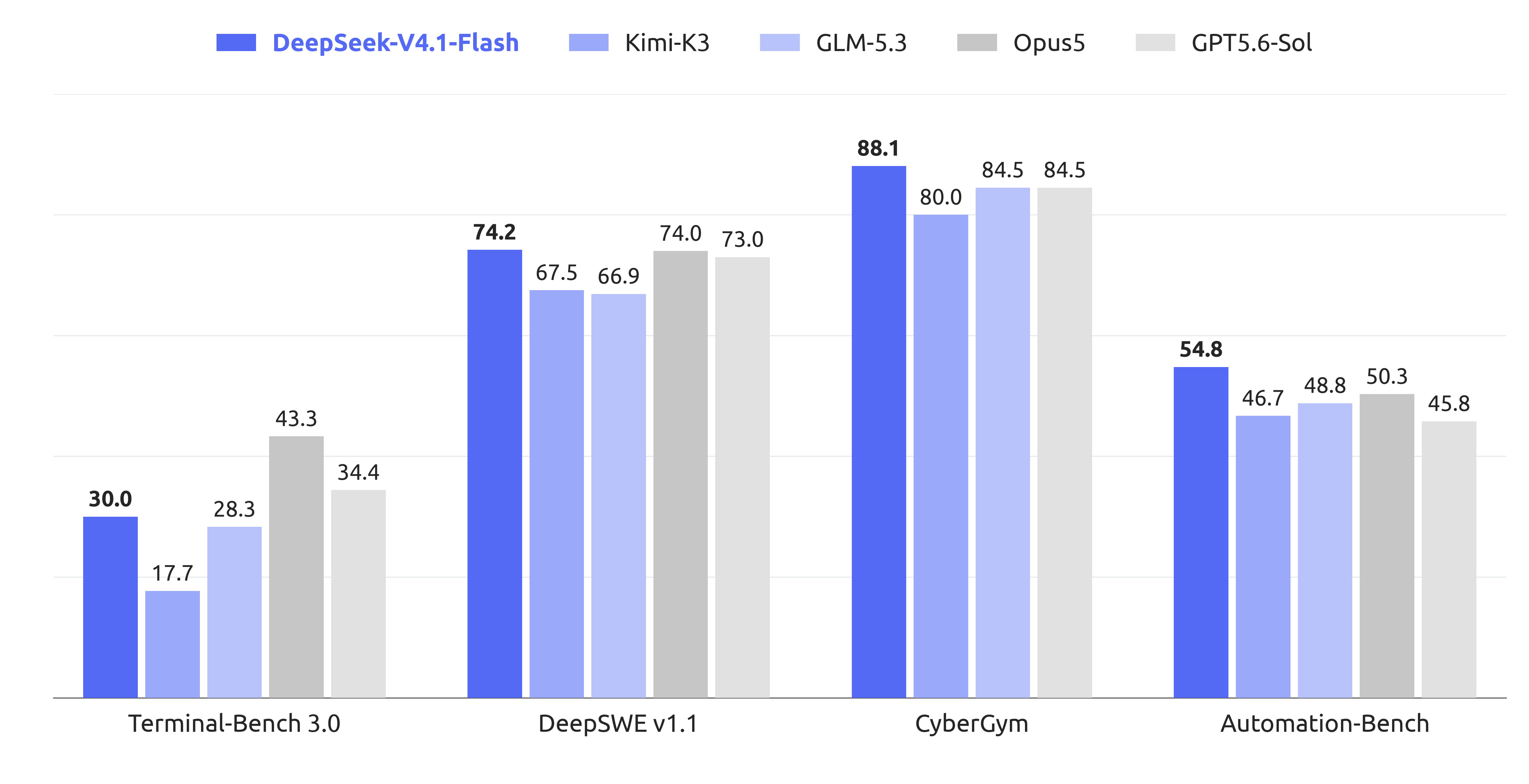
V4.1-Flash is a 552B MoE on a new Causal Encoder–Decoder architecture: 8B active during prefill, 16B during decode, 1M context and native image understanding. DeepSeek says its KV cache needs one quarter the HBM and one eighth the SSD storage of the previous generation.

Peak prices dropped to $0.30/$1.20 per million tokens, the weights are MIT-licensed, and V4-Flash is being retired. DeepSeek is optimizing the cost line agent loops actually pay: prefill and cache.

DeepSeek V4.1 Flash benchmark
DeepSeek

WHY IT MATTERS

Long-context agents become affordable when memory is cheap, not just when tokens are cheap. This is the efficiency release to benchmark against if you run input-heavy workflows.

THU · Sep 10, 2026AgentsTooling

OpenAI rents out the Codex harness as the Agents API

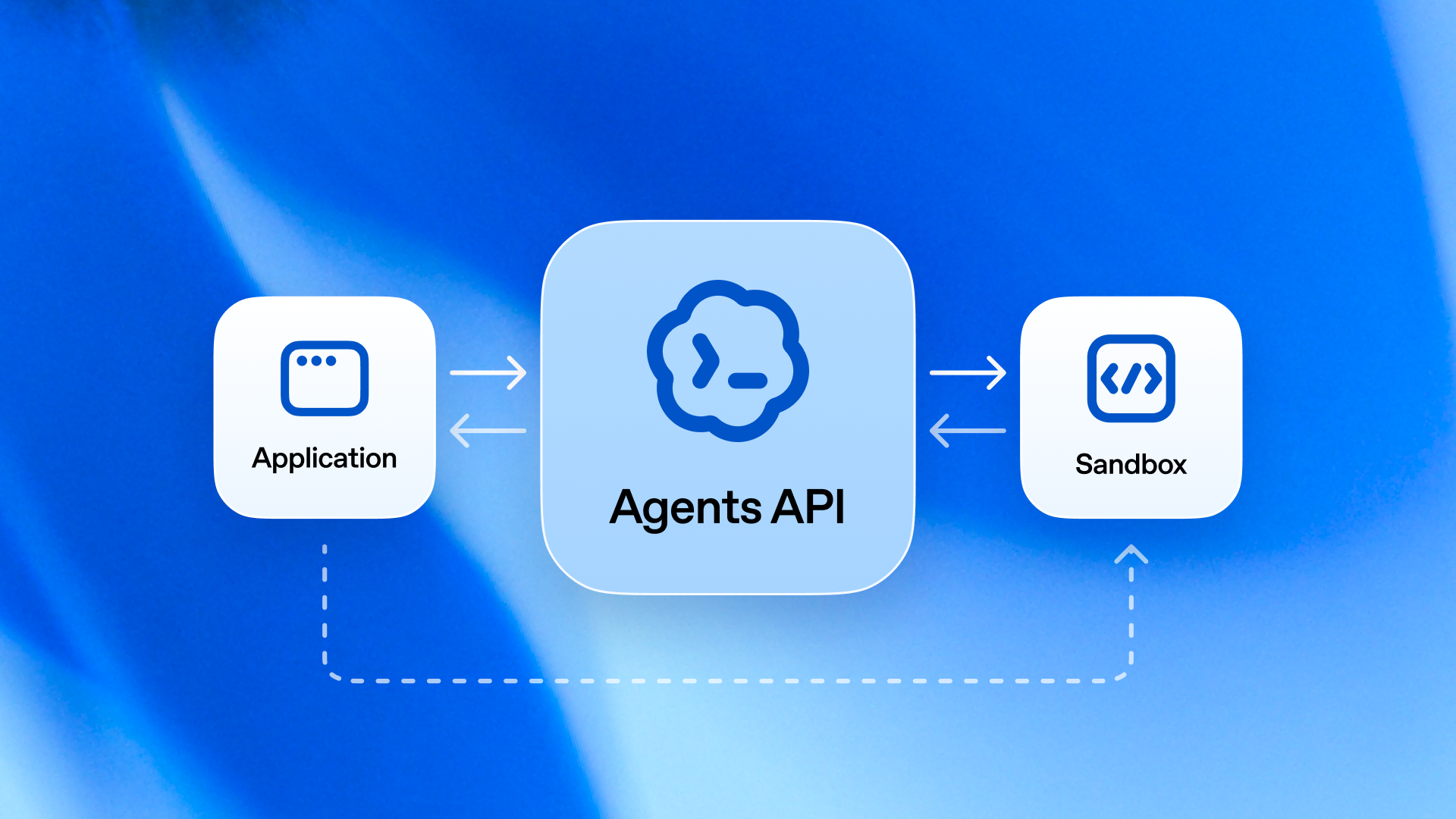
OpenAI opened an Agents API beta exposing the Codex harness as a managed service: durable sessions, compaction, crash recovery, tool search and subagent orchestration in one call. Code runs in OpenAI sandboxes, over a WebSocket exec server or in partner environments including Modal, Vercel and Cloudflare.

There is no surcharge on the API itself; you pay model, tool and container rates. Data residency is US-only and the service is not Zero Data Retention eligible.

OpenAI Agents API artwork
OpenAI

WHY IT MATTERS

The agent runtime is becoming a commodity you can rent instead of maintain. Re-run build-versus-buy if you own session, compaction and fan-out infrastructure — but model the container meter.

TUE · Sep 8, 2026AgentsResearchData

OpenAI solved Navier–Stokes with 10,000 agents — then got accused of racing the men who were already there

OpenAI published a proof and Lean 4 formalization arguing that 3D incompressible Navier–Stokes flow can develop a finite-time singularity. Roughly 10,000 concurrent agents did it in 88 hours — 2.7M messages, about 130B output tokens, and compute OpenAI puts “in the millions of dollars”. It arrived with a fight attached.

NYU's Tristan Buckmaster and Levent Alpöge, a mathematician at Anthropic, had spent a year on the same problem in a strictly personal collaboration, using Claude and Codex and keeping every draft inside Codex sessions. Buckmaster says OpenAI described a proof of the “forced” problem — the same unusual route they had taken, and, in his words, “a bright red flag”. He asked whether the model had been trained on or had access to those sessions; he says he was told it did not look up user data, and was given no answer on training. He also says OpenAI researcher Sébastien Bubeck twice asked for Alpöge to be dropped from authorship because he works at Anthropic, and that when he threatened to go public the reply was “Why would you ruin your career?”, followed by “If you don't want me to be nice, then I don't have to be nice.”

OpenAI denies seeing their work, insists the proofs differ, and concedes it “cannot rule out that de-identified data derived from their usage of our products helped improve our models”. Buckmaster's own statement is careful: he has not seen the proof, does not know whether their data was used, and says he is not accusing anyone — only recounting what he was told. The field reacted anyway: 25 Fields Medalists signed an open letter on verification and attribution, OpenAI pulled its sponsorship of Caltech's Mathathon, and it says it will not claim the $1M prize.

Navier-Stokes research artwork
OpenAI

WHY IT MATTERS

For anyone who points a coding agent at their own work, this is the case study. Buckmaster put a year of unpublished research through Codex sessions, and the company hosting that agent cannot say for certain whether it helped train the model that reached his answer first. The boundary between “your data” and “their training set” is not something you can audit from outside, and no contract gives you sight of it. If your prompts carry your business logic, your research or your edge, that is the exposure — and the blast radius grows with how capable the tool is. Run it on weights you control, or accept that a lab may publish your conclusion before you do.
TUE · Sep 8, 2026ScienceDatasets

AlphaGenome Atlas precomputes 9 billion DNA variants

Google DeepMind released a 1PB dataset of AlphaGenome predictions for every possible single-nucleotide variant in the human genome — more than 30 times the AlphaFold Database. It is free for non-commercial academic use through a portal, API and Antigravity skill.

Collaborators used it to find a splice-site variant linked to epilepsy and more non-coding associations in UK Biobank genomes.

AlphaGenome Atlas artwork
Google DeepMind

WHY IT MATTERS

This is the precompute-the-model, ship-the-dataset pattern that turned AlphaFold into a utility. Expensive inference becomes a queryable product surface.