OpenAI gave GPT-6 permission to answer with an interface
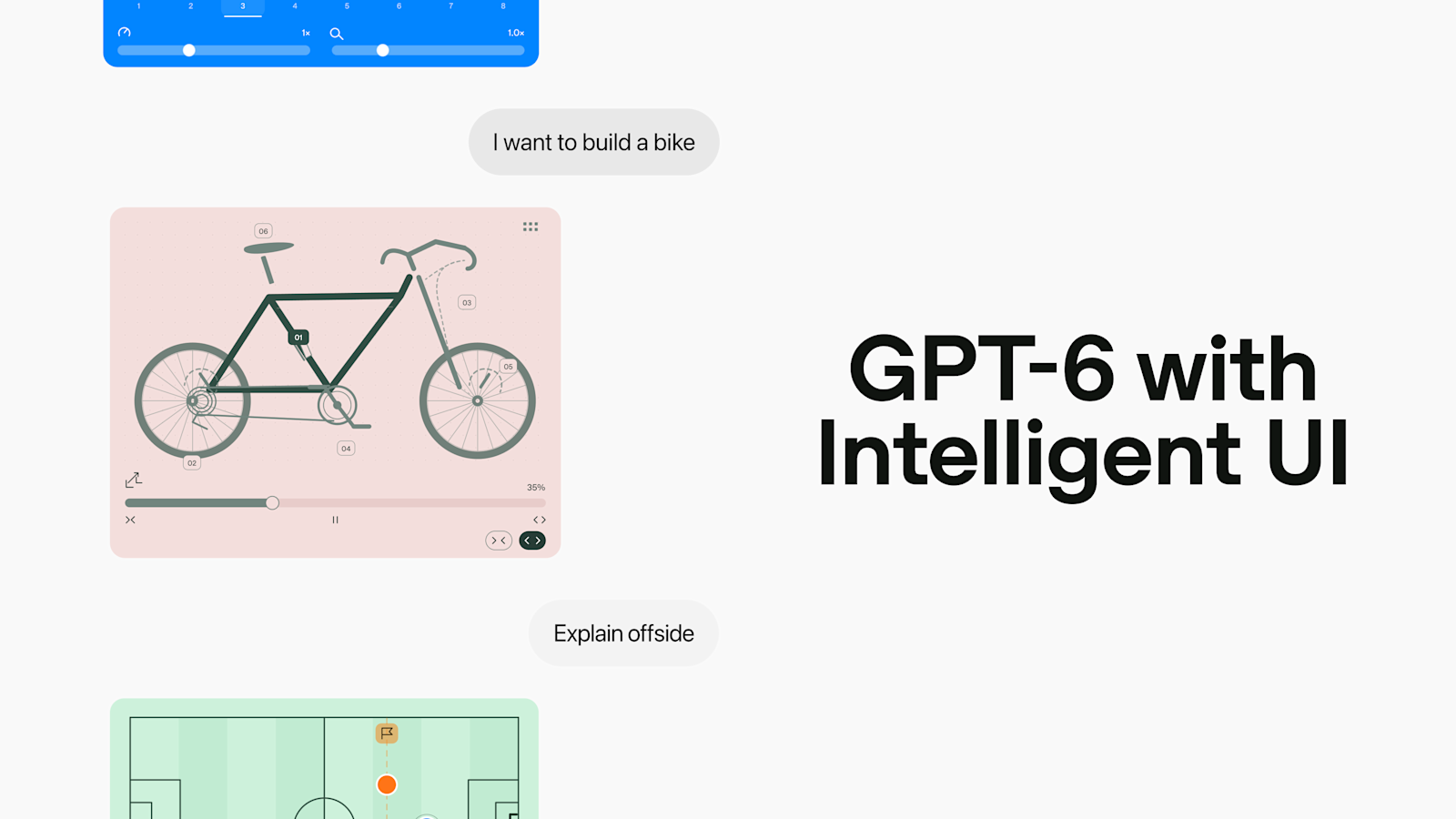
OpenAI brought GPT-6 to the whole ChatGPT base on Wednesday — the more than 1.2 billion people it says use the product each week — with a capability it calls Intelligent UI. Rather than returning text, GPT-6 composes a response from a library of native, streamable components, choosing graphics, tappable buttons, forms and charts when they fit the question, and rendering them progressively as it generates instead of waiting for the whole answer. Paid tiers get GPT-6 Sol; Free and Go get GPT-6 Luna, both tuned for everyday conversation.
The company says interleaving thinking with answering lets it start replying earlier: GPT-6 Extra High begins in the time GPT-5.6 Medium took while scoring higher than GPT-5.6 Extra High, and GPT-6 Instant starts answering 44% sooner on questions that need web search. The models behind Work and Codex are unchanged by the release. OpenAI describes Intelligent UI as a step toward software that adapts to the user rather than the reverse, while noting the model’s design judgment still has work ahead.
WHY IT MATTERS
The interesting claim is not that ChatGPT can draw a chart — it is that OpenAI is training a model to decide what shape an answer should take, and shipping a compiler so the interface appears while the model is still thinking. That is a product bet that the chat transcript was a temporary interface, and it is one anyone building their own agent should watch: the same component library and streaming pattern is what would make a local agent feel native rather than like a terminal with an attitude. For a team paying per token, the interleaving claim is the practical half — a visible answer sooner is a latency win at no extra cost. The caveat deserves one line: OpenAI’s gains are internal evaluations, and the model’s design judgment is the part it admits is unfinished.