WEEK OF JAN 3 – 9, 2026

Nvidia opened the physical-AI stack and DOJ went after state AI laws

CES handed out open weights for robots and cars, xAI banked $20B, and a zero-click ChatGPT attack showed how durable a poisoned memory can be.

Nvidia used CES to give away the starting point for embodied AI — models, data and simulators across four families — while saying its next datacenter platform is already in volume production. Two of those are long-term bets; the production line is the one with immediate consequences.

On the security side, the week produced the clearest illustration yet of what happens when a model has memory *and* tool access.

FRI · Jan 9, 2026PolicyRegulation

DOJ creates a task force to challenge state AI laws

Attorney General Pam Bondi issued a memorandum creating the Department of Justice's AI Litigation Task Force, whose “sole responsibility shall be to challenge state AI laws inconsistent with” federal policy — the policy being a “minimally burdensome national policy framework for AI.”

It implements the December 2025 executive order on a national AI framework and gave the AG thirty days to stand the task force up. It arrived days after California's and Texas's AI statutes took effect on January 1.

WHY IT MATTERS

Frontier-lab compliance is about to be litigated rather than legislated. The practical read: build to the federal baseline and keep state-specific requirements behind a flag.
THU · Jan 8, 2026SecurityAgents

A zero-click ChatGPT attack that persists through memory

Radware disclosed vulnerabilities letting an attacker exfiltrate data from connected services — Gmail, Outlook, Drive, GitHub and others — without the victim clicking anything, and persist the bypass logic by writing it into ChatGPT's long-term memory.

OpenAI had already tried to break the attack by forbidding connectors and memory in the same session and blocking memory-sourced URL opens; Radware says the guardrails remain bypassable.

WHY IT MATTERS

This is the agent-security problem in miniature: once a model has memory plus tool access, one poisoned input becomes a durable, self-reinstalling foothold. Treat memory, connectors and network egress as a single combined trust boundary.

TUE · Jan 6, 2026HardwareInference

Vera Rubin enters full production on six TSMC-made chips

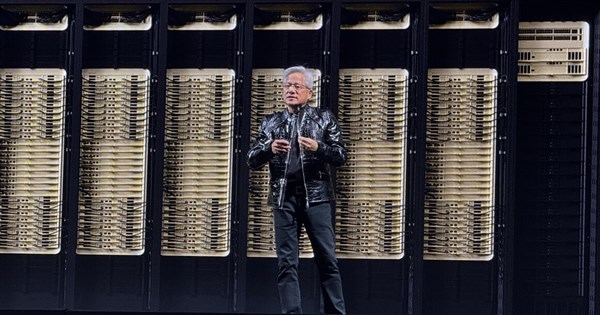
In his CES keynote Jensen Huang introduced Nvidia's next platform — six new chips fabricated by TSMC — and said it is now in full production, with the focus on the Vera CPU plus Rubin GPU pairing and the rack-scale design changes that come with it.

Coverage out of Taipei framed it as the company moving from sampling to volume on the hardware that will underpin the next wave of training and inference clusters.

Vera Rubin enters full production on six TSMC-made chips
imgcdn.cna.com.tw

WHY IT MATTERS

Every serving-efficiency and cost-per-token number you see this year gets negotiated against this generation of silicon. An on-schedule ramp means more pressure downward on inference pricing.

TUE · Jan 6, 2026FundingInfrastructure

xAI closes an upsized $20B Series E

xAI completed an upsized Series E, raising $20B against an initial $15B target, with reports putting the post-money valuation around $230B and Nvidia and Cisco among the backers.

The company framed the raise around model development and its Colossus data-center buildout. It landed while xAI was under scrutiny over child-safety issues around Grok.

WHY IT MATTERS

Scale of capital is a first-class technical variable: rounds this size buy GPU fleets, and GPU fleets buy training runs.

MON · Jan 5, 2026Open weightsRobotics

Nvidia opens its physical-AI stack at CES

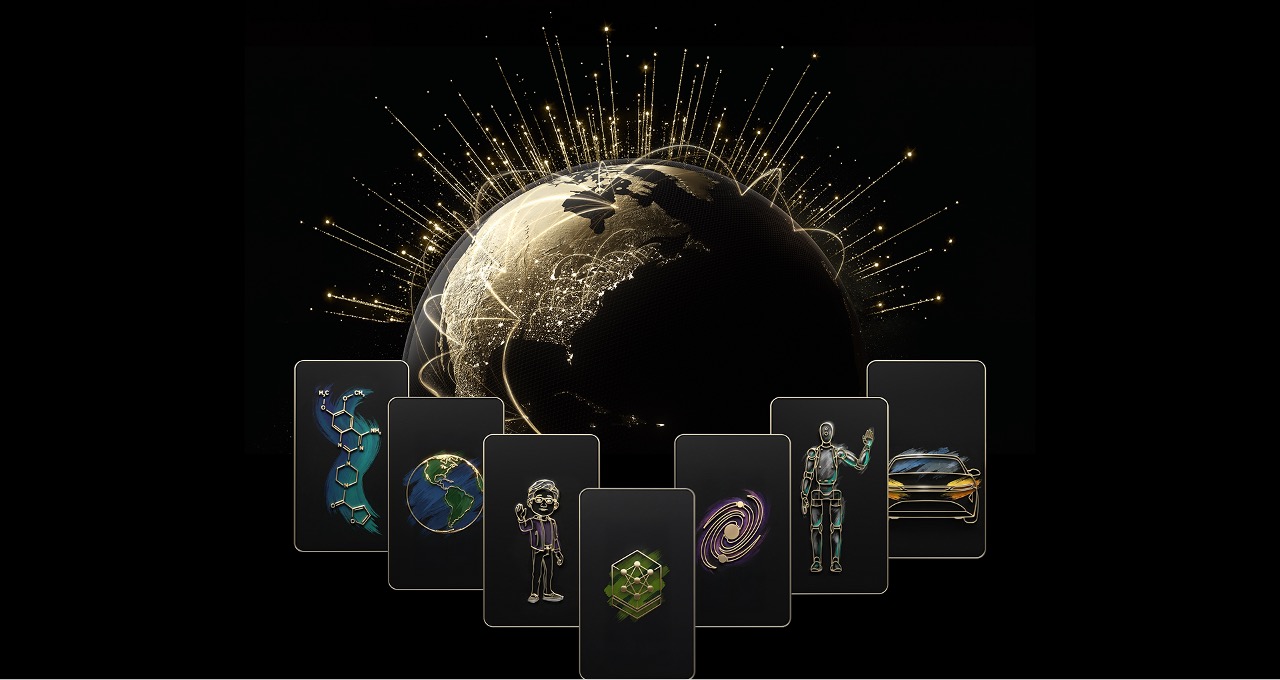
Nvidia released open models, datasets and tools across four families: Alpamayo for autonomous vehicles, Nemotron for agentic AI, Cosmos for physical AI, GR00T for robotics and Clara for biomedical. The centerpiece is Alpamayo 1, a 10B chain-of-thought vision-language-action model that reasons about a driving maneuver before emitting a trajectory.

Alongside the weights Nvidia contributed roughly 10 trillion language training tokens, 500,000 robotics trajectories, 455,000 protein structures and about 100TB of vehicle sensor data, plus an AlpaSim simulator and 1,700+ hours of driving data.

Nvidia opens its physical-AI stack at CES
NVIDIA

WHY IT MATTERS

The pretrained starting point and the evaluation data for autonomous and embodied work just became free, which moves the differentiator up to fine-tuning, simulation and serving.

MON · Jan 5, 2026ArchitectureOpen weights

Abu Dhabi's TII ships a hybrid Mamba-Transformer family

TII released Falcon-H1-Arabic at 3B, 7B and 34B, built on the Falcon-H1 hybrid architecture that runs Mamba state-space layers and Transformer attention in parallel inside every block and fuses their representations before the output projection.

TII claims the family beats same-size and sometimes larger models on Arabic benchmarks, with the hybrid design giving substantially better long-context memory behavior and faster inference than a pure Transformer of comparable quality.

WHY IT MATTERS

The hybrid SSM/attention recipe is the most portable efficiency idea in open weights right now, and here it is validated on a low-resource language rather than English.