WEEK OF JAN 10 – 16, 2026

Apple handed Siri to Gemini, and the agent loop left the terminal

Apple licensed the intelligence layer instead of building it, Anthropic turned Claude Code's loop on ordinary files, and DeepSeek proposed a second axis of sparsity.

The most consequential shift this week was not inside a model. Apple — with roughly two billion active devices — concluded it could not build a competitive assistant internally and licensed the intelligence layer from Google.

Underneath that, the agent story kept moving: one week after thinking about tool harnesses, Anthropic shipped a desktop agent for people who do not write code.

WED · Jan 14, 2026InfrastructurePartnerships

OpenAI buys 750MW of wafer-scale inference from Cerebras

OpenAI and Cerebras announced a multi-year agreement to deploy 750 megawatts of wafer-scale systems, coming online in tranches through 2028. OpenAI framed it as portfolio thinking — matching systems to workloads — with 750MW dedicated to low-latency inference.

Cerebras claims up to 15x faster responses than GPU-based systems and called it the largest high-speed inference deployment in the world. The deal reportedly exceeds $10B and diversifies Cerebras away from G42, which supplied 87% of its first-half 2024 revenue.
OpenAI and Cerebras
OpenAI

WHY IT MATTERS

Inference speed is becoming a product feature rather than a cost line: an extra second of decode changes what users will actually ask a coding or voice agent to do. A frontier lab routing hundreds of megawatts to non-GPU silicon is also a real crack in Nvidia's default position.
WED · Jan 14, 2026LeadershipTalent

Two Thinking Machines co-founders defect back to OpenAI

Mira Murati announced on X that Thinking Machines Lab had “parted ways with Barret Zoph,” its co-founder and CTO, naming PyTorch creator Soumith Chintala as the new CTO.

Fifty-eight minutes later OpenAI's CEO of applications Fidji Simo announced that Zoph, co-founder Luke Metz and Sam Schoenholz were returning to OpenAI, saying the move “has been in the works for several weeks.” Wired reported the Zoph split was not amicable, and a reporter said sources described a termination over conduct.

WHY IT MATTERS

Lab-to-lab talent flow is usually noise; co-founder-level reversal at a lab this young is signal. With Andrew Tulloch already gone to Meta, half of the six-person founding leadership left within a year of launch despite a $2B seed at a $12B valuation. Compute and deployment gravity beat equity.

TUE · Jan 13, 2026PolicyHardware

US eases the export rule that kept H200s out of China

Commerce's Bureau of Industry and Security shifted license review for certain advanced computing commodities bound for China and Macau from a presumption of denial to case-by-case review. The rule covers chips below 21,000 total processing performance and 6,500 GB/s DRAM bandwidth — explicitly Nvidia's H200 and AMD's MI325X.

It requires certifications that US supply will not be cannibalized, that exported aggregate TPP stays under 50% of US-shipped TPP, and that each shipment is reviewed by a qualified US third-party test lab. Reexports remain under a presumption of denial, and Beijing has signalled it may refuse H200 imports.

WHY IT MATTERS

The engineering detail matters more than the politics: a hard 50% TPP ratio ties export volume to domestic capacity, so a chunk of the world's H-class silicon may re-enter the global market — or sit idle if China blocks it.

MON · Jan 12, 2026IndustryPartnerships

Apple picks Gemini to power the next generation of Siri

Apple and Google published a joint statement confirming a multi-year collaboration in which the next generation of Apple Foundation Models will be based on Google's Gemini models and cloud technology, powering future Apple Intelligence features including a more personalized Siri.

Apple said it evaluated the field and concluded Google's AI provides “the most capable foundation,” while Apple Intelligence keeps running on Apple devices and Private Compute. Reporting put the licensing value at roughly $1B per year. The existing ChatGPT integration stays in place but was widely framed as demoted to a backup role.

WHY IT MATTERS

Model quality now outweighs vertical integration at the device layer. For developers it means a Gemini-shaped Apple Intelligence surface becomes a platform target this year — and it creates a second Apple default-placement payment that antitrust watchers are already calling the next Microsoft case.

MON · Jan 12, 2026AgentsTooling

Anthropic ships Claude Cowork — the agent loop, pointed at your files

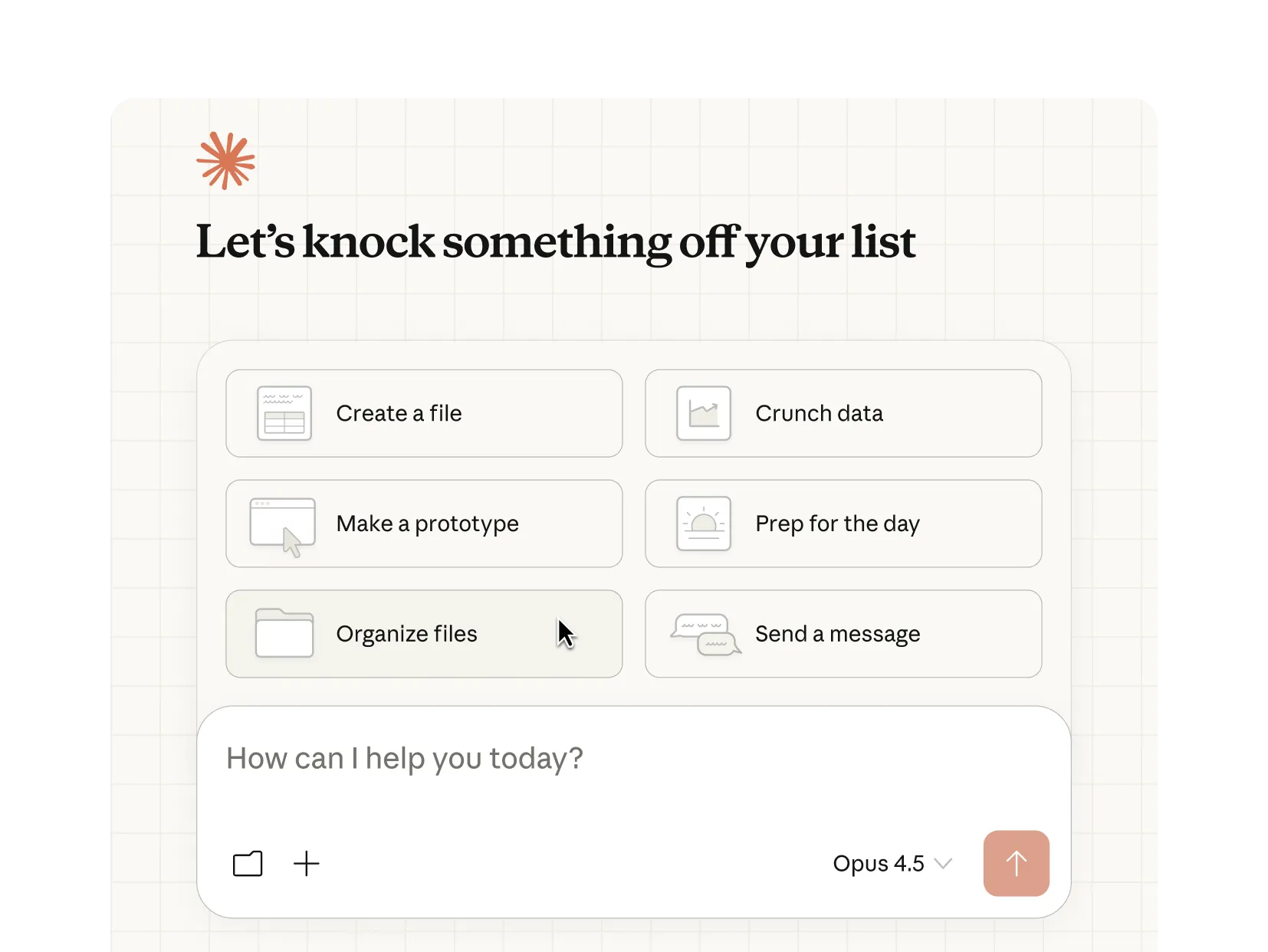
Anthropic launched Claude Cowork as a research preview, described as Claude Code for the rest of your work. It lives in the desktop app (macOS, Max subscribers initially) and gives Claude permissioned access to a folder where it reads, edits and creates files inside a sandbox, plans multi-step tasks, runs sub-agents in parallel and checks its own work.

It is built on the same Agent SDK and architecture as Claude Code. Press reporting corroborated by Anthropic staff said the team built the feature in roughly a week and a half, largely using Claude Code itself.

Claude Cowork
Anthropic

WHY IT MATTERS

This is the harness question made commercial: same model, same loop, different interface and sandbox. It puts Anthropic directly against Microsoft Copilot and Google's Workspace layer — and the “built in ten days by the agent” detail is the most concrete evidence yet of agentic leverage inside a frontier lab.

MON · Jan 12, 2026ResearchArchitecture

DeepSeek proposes conditional memory as a second sparsity axis

DeepSeek published “Conditional Memory via Scalable Lookup” and open-sourced the module under Apache 2.0. The argument: Transformers have no native knowledge-lookup primitive and waste computation simulating retrieval. Engram is a modernized N-gram embedding with O(1) lookup.

At 27B parameters under matched iso-parameter and iso-FLOPs budgets, the authors report MMLU +3.4 and CMMLU +4.0, with larger wins in reasoning (BBH +5.0, ARC-Challenge +3.7) and code/math (HumanEval +3.0, MATH +2.4). Long-context retrieval improved from 84.2 to 97.0 on Multi-Query NIAH. Deterministic addressing lets the embedding tables be offloaded to host memory.

Engram architecture
DeepSeek

WHY IT MATTERS

This is the kind of paper that moves serving economics rather than benchmark tables. If it holds up, part of the context and KV pressure shifts off the attention path and onto a lookup table that can live in host memory — exactly the direction cost-per-token work needs.