DISPATCH

Everything that mattered in AI, one page a week.

Most AI news does not survive the week. This is the part that did — the releases, the research, and the shifts that actually change how we build. Designed & built to keep you up to date with things in AI without needing to be unemployed. Just refresh Saturday morning and review the last week's dispatch.

90 DISPATCHESWRITTEN EVERY FRIDAYNEXT UPDATE IN

DISPATCH 54

WEEK OF JAN 3 – 9, 2026

Nvidia opened the physical-AI stack and DOJ went after state AI laws

CES handed out open weights for robots and cars, xAI banked $20B, and a zero-click ChatGPT attack showed how durable a poisoned memory can be.

Nvidia used CES to give away the starting point for embodied AI — models, data and simulators across four families — while saying its next datacenter platform is already in volume production. Two of those are long-term bets; the production line is the one with immediate consequences.

On the security side, the week produced the clearest illustration yet of what happens when a model has memory *and* tool access.

FRI · Jan 9, 2026PolicyRegulation

DOJ creates a task force to challenge state AI laws

Attorney General Pam Bondi issued a memorandum creating the Department of Justice's AI Litigation Task Force, whose “sole responsibility shall be to challenge state AI laws inconsistent with” federal policy — the policy being a “minimally burdensome national policy framework for AI.”

It implements the December 2025 executive order on a national AI framework and gave the AG thirty days to stand the task force up. It arrived days after California's and Texas's AI statutes took effect on January 1.

WHY IT MATTERS

Frontier-lab compliance is about to be litigated rather than legislated. The practical read: build to the federal baseline and keep state-specific requirements behind a flag.

THU · Jan 8, 2026SecurityAgents

A zero-click ChatGPT attack that persists through memory

Radware disclosed vulnerabilities letting an attacker exfiltrate data from connected services — Gmail, Outlook, Drive, GitHub and others — without the victim clicking anything, and persist the bypass logic by writing it into ChatGPT's long-term memory.

OpenAI had already tried to break the attack by forbidding connectors and memory in the same session and blocking memory-sourced URL opens; Radware says the guardrails remain bypassable.

WHY IT MATTERS

This is the agent-security problem in miniature: once a model has memory plus tool access, one poisoned input becomes a durable, self-reinstalling foothold. Treat memory, connectors and network egress as a single combined trust boundary.

TUE · Jan 6, 2026HardwareInference

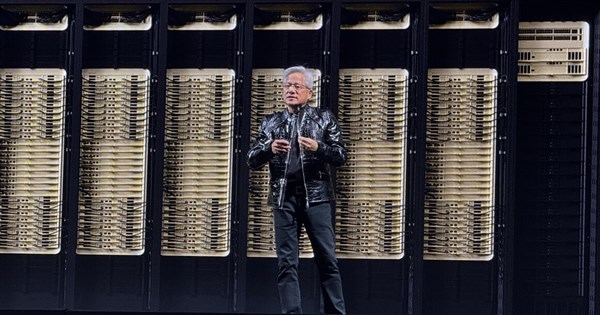
Vera Rubin enters full production on six TSMC-made chips

In his CES keynote Jensen Huang introduced Nvidia's next platform — six new chips fabricated by TSMC — and said it is now in full production, with the focus on the Vera CPU plus Rubin GPU pairing and the rack-scale design changes that come with it.

Coverage out of Taipei framed it as the company moving from sampling to volume on the hardware that will underpin the next wave of training and inference clusters.

Vera Rubin enters full production on six TSMC-made chips
imgcdn.cna.com.tw

WHY IT MATTERS

Every serving-efficiency and cost-per-token number you see this year gets negotiated against this generation of silicon. An on-schedule ramp means more pressure downward on inference pricing.

TUE · Jan 6, 2026FundingInfrastructure

xAI closes an upsized $20B Series E

xAI completed an upsized Series E, raising $20B against an initial $15B target, with reports putting the post-money valuation around $230B and Nvidia and Cisco among the backers.

The company framed the raise around model development and its Colossus data-center buildout. It landed while xAI was under scrutiny over child-safety issues around Grok.

WHY IT MATTERS

Scale of capital is a first-class technical variable: rounds this size buy GPU fleets, and GPU fleets buy training runs.

MON · Jan 5, 2026Open weightsRobotics

Nvidia opens its physical-AI stack at CES

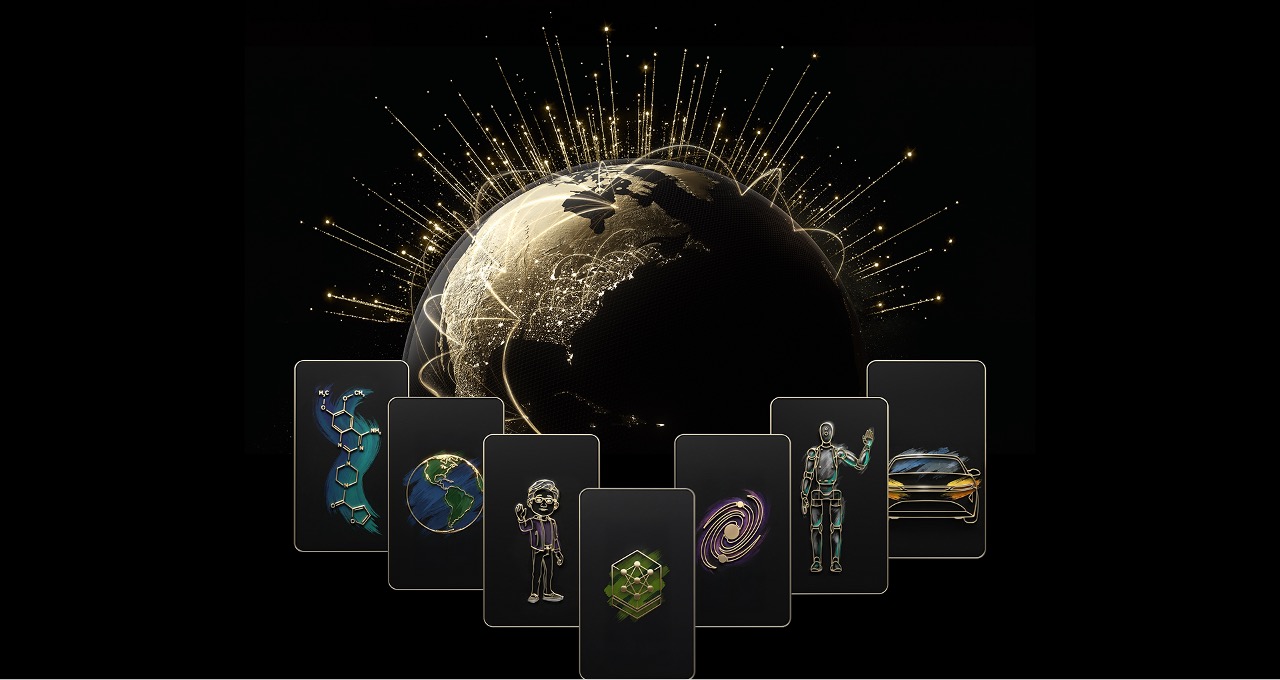
Nvidia released open models, datasets and tools across four families: Alpamayo for autonomous vehicles, Nemotron for agentic AI, Cosmos for physical AI, GR00T for robotics and Clara for biomedical. The centerpiece is Alpamayo 1, a 10B chain-of-thought vision-language-action model that reasons about a driving maneuver before emitting a trajectory.

Alongside the weights Nvidia contributed roughly 10 trillion language training tokens, 500,000 robotics trajectories, 455,000 protein structures and about 100TB of vehicle sensor data, plus an AlpaSim simulator and 1,700+ hours of driving data.

Nvidia opens its physical-AI stack at CES
NVIDIA

WHY IT MATTERS

The pretrained starting point and the evaluation data for autonomous and embodied work just became free, which moves the differentiator up to fine-tuning, simulation and serving.

MON · Jan 5, 2026ArchitectureOpen weights

Abu Dhabi's TII ships a hybrid Mamba-Transformer family

TII released Falcon-H1-Arabic at 3B, 7B and 34B, built on the Falcon-H1 hybrid architecture that runs Mamba state-space layers and Transformer attention in parallel inside every block and fuses their representations before the output projection.

TII claims the family beats same-size and sometimes larger models on Arabic benchmarks, with the hybrid design giving substantially better long-context memory behavior and faster inference than a pure Transformer of comparable quality.

WHY IT MATTERS

The hybrid SSM/attention recipe is the most portable efficiency idea in open weights right now, and here it is validated on a low-resource language rather than English.

DISPATCH 53

WEEK OF DEC 27, 2025 – JAN 2, 2026

Meta bought the agent, xAI sued California, and RAM got expensive

A holiday week with no flagship launch, so the news was structural: an agent acquisition, a courtroom fight over training-data disclosure, and the first place AI's appetite showed up in your own budget.

Nothing frontier shipped in the last week of the year, which made it a good week to notice where the pressure is building. Three of this week's stories point the same direction: the value is moving into the layer between the model and the work.

Two state AI laws also took effect on January 1, and one company went to federal court to stop that from happening.

WED · Dec 31, 2025LeadershipMicrosoft

Nadella rebuilds Microsoft's leadership around AI

The Financial Times reported that Satya Nadella reworked Microsoft's senior leadership through 2025 to accelerate in-house AI work after the company's OpenAI exclusivity eroded — Microsoft loses exclusive access to OpenAI research after 2030 — and after Copilot fell behind ChatGPT and Gemini.

Notable moves: ex-Meta engineering executive Jay Parikh now runs the CoreAI platform group, and LinkedIn CEO Ryan Roslansky and commercial chief Judson Althoff were elevated into a consolidated inner circle of roughly sixteen direct reports. Deputy CTO Dee Templeton told the FT: “Satya is in Founder Mode.”

WHY IT MATTERS

Microsoft's AI platform decisions now run through a much flatter org with its own budget. Worth watching if you build on Azure AI or Copilot surfaces.

TUE · Dec 30, 2025LitigationPolicy

xAI sues California over the training-data disclosure law

xAI filed a federal suit in the Central District of California naming Attorney General Rob Bonta, asking the court to declare the Generative AI Training Data Transparency Act unconstitutional. AB 2013 took effect January 1 and requires developers of generative systems available in California to publish dataset documentation across twelve categories — sources, data types, sizes, copyright status, whether data was purchased or licensed, and more.

The 55-page complaint calls it an “unconstitutional trade-secrets-destroying disclosure regime” that compels speech and takes property without compensation, arguing dataset composition is a core competitive secret.

WHY IT MATTERS

If you ship a model or run training pipelines out of California, the obligations started January 1. This is the fastest-moving test of whether “publish your dataset summary” survives First Amendment and takings analysis.

TUE · Dec 30, 2025AgentsOpen weights

Alibaba open-weights a family of GUI agents

Alibaba's Tongyi-MAI team released MAI-UI, foundation GUI agents at 2B, 8B, 32B and a sparse 235B-A22B, built on a Qwen3-VL backbone. The 2B and 8B weights are Apache 2.0 on Hugging Face.

Reported results: 76.7% on AndroidWorld and 73.5% on ScreenSpot-Pro. The engineering is the interesting part — a device-cloud split that routes execution by task state, reported 33% better on-device performance and 40%+ fewer cloud calls, plus native MCP tool calls and an online RL setup where scaling parallel environments from 32 to 512 added 5.2 points.

MAI-UI technical report figure
Tongyi-MAI

WHY IT MATTERS

An 8B Apache-2.0 model that can drive phones and desktops, calls MCP tools natively and runs a hybrid local/cloud split is the most deployable open GUI-agent release so far.

TUE · Dec 30, 2025Open weightsPost-training

Tencent open-sources billion-parameter text-to-motion models

Tencent Hunyuan released HY-Motion 1.0, text-to-3D human motion models built on a Diffusion Transformer with flow matching — by their account the first time DiT-based text-to-motion has been scaled to the billion-parameter level.

The recipe is a fully documented three-stage stack: pretraining on 3,000+ hours of motion data, fine-tuning on 400 curated hours, then RLHF with reward models to tighten instruction following. Inference code and weights are on Hugging Face with a demo Space.

HY-Motion 1.0 banner
Tencent Hunyuan

WHY IT MATTERS

A clean, fully documented post-training pipeline for a non-text modality, and the outputs are skeleton animations you can drop straight into a 3D or game pipeline.

MON · Dec 29, 2025AgentsM&A

Meta acquires Manus, the general-purpose agent startup

Meta said it would acquire Manus, the Singapore-based general agent company that went viral in early 2025. Terms were not disclosed, but a source with direct knowledge put the deal at $2–3 billion.

Manus says it keeps running and selling its subscription product from Singapore while being integrated into Meta's consumer and business surfaces, including Meta AI. Its own numbers: more than 147 trillion tokens processed and over 80 million virtual computers powered.

WHY IT MATTERS

Manus-style general-agent harnesses are the reference design a lot of developers are copying. Meta now owns one plus its execution infrastructure, so expect the agent product surface and its pricing to shift as it gets folded into Meta AI.

SUN · Dec 28, 2025HardwareSupply chain

AI memory demand turns into a RAM shortage

NPR reported that AI data centers have soaked up so much memory capacity that RAM supply trails demand, and the imbalance is about to show up in the price of computers, phones and consoles. TrendForce's Avril Wu told NPR demand exceeds supply by about 10%, buyers paid roughly 50% more for common DRAM this quarter, and rush orders cost two to three times more — with another ~40% increase expected next quarter.

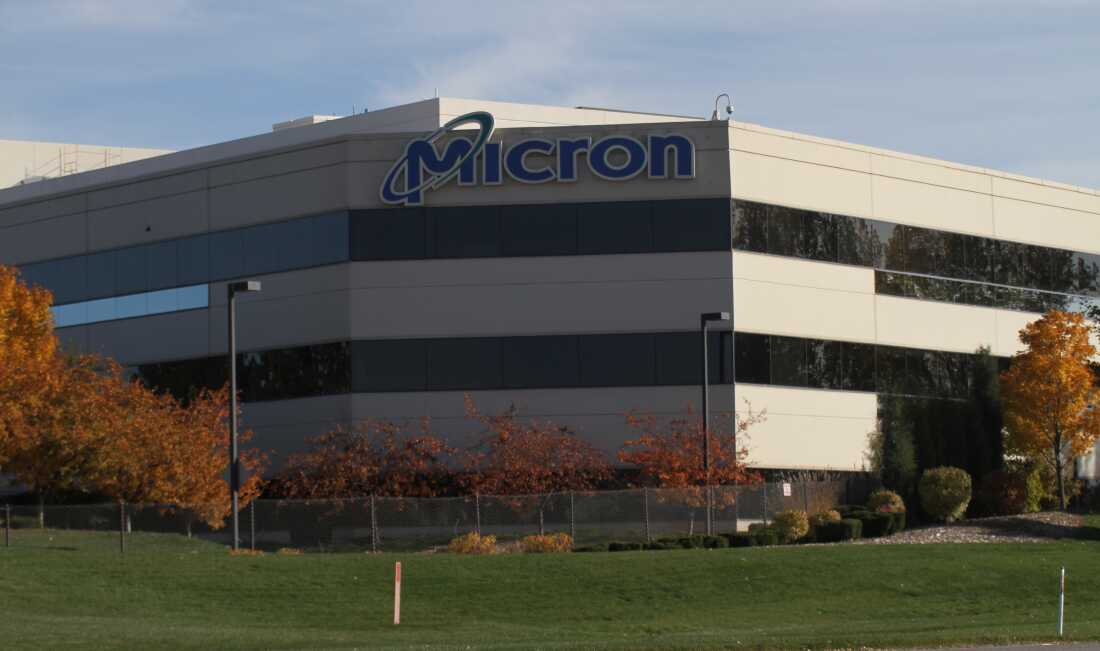
Micron posted better-than-expected earnings on the higher prices and said supply will remain “substantially short of the demand for the foreseeable future.”

Memory chips
NPR / AP

WHY IT MATTERS

The rare AI story with a direct line to your own budget. The next RAM or NVMe upgrade, and the cost of any self-hosted inference box, is being repriced by data-center demand.

ARCHIVE

Go back in time

Every dispatch, newest first. Each week is written once and left as it was published.